World Cup 2026
Chasing the childhood feeling

At a Design FC event, Luke Fairbairn quoted someone who said, “When you’re an adult, you chase the feeling of your first World Cup.” That line has been stuck in my head ever since.
At my big age now, I’m unc, as the kids say, I’ve realized that’s exactly what I’ve been doing. Chasing the feeling of France ‘98. If someone told me what the high from crack feels like, it’s probably the same as the 1998 World Cup. What a time, to my young mind, it was pure magic. All I cared about back then was football. Playing it, watching it, going to games, discussing it. 1998 was special to me.
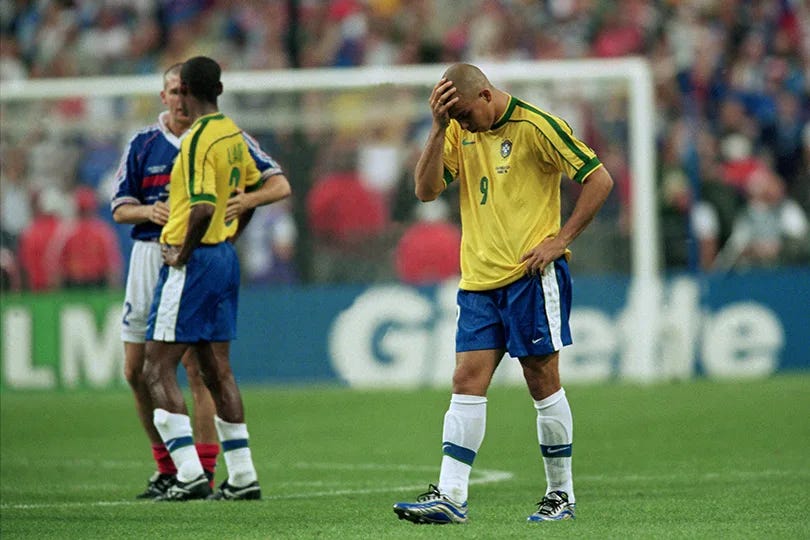
Fast forward to 2026, and I still care. Unfortunately, I am socially and politically aware of the world around me now. That means seeing injustice, even in the sanctity of football, leaves me with a sour taste. Maybe that’s what this World Cup is for me: a collision between childhood wonder and adult awareness.
The 2026 World Cup is unlike anything we’ve seen before. It’s an expanded tournament, increasing from 32 to 48 teams, the first World Cup hosted by three nations, and the biggest expansion in the competition’s history. The 1998 World Cup moved from 24 teams to 32 and changed football forever. 2026 goes even further.
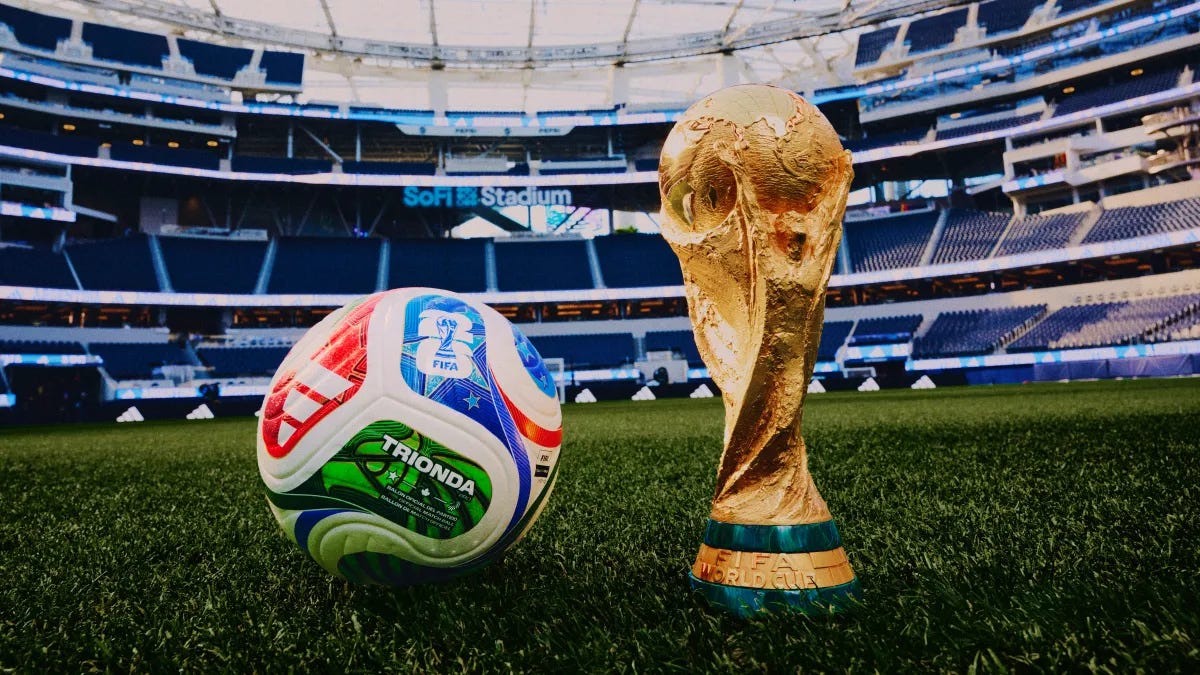
Cape Verde, Curaçao, Jordan, and Uzbekistan will be at their first-ever World Cups. Europe added three spots. Africa added four. Asia added four. South America added two. Oceania added one.
Tactically, football is in a wild but fun place. As Slim Charles said, the game is the same, it just got more fierce. More pressing, less individual brilliance, more cohesion in defensive shape. Data runs the gamut, but football will always be football. There will always be room for the unexpected, unexplained, and downright confusing.
My prediction is simple: chaos wins. Every favorite has flaws. France has questions, Spain is relying heavily on young stars, and Germany remains difficult to trust. The Netherlands feels stagnant, England is consistent with their failure, Argentina is older, even if Messi remains fine wine. Portugal still has to answer whether Cristiano can get out of the way.
Then there are the underdogs: Ecuador, Senegal, Morocco, Ivory Coast, Japan, and Norway. There are 48 teams now; every dog has its day.
Football as a product, though, feels different from it did when I was a kid. It reminds me of what Mos Def once said: “So many products! So many SKUs! Look at all these SKUs!” Everyone wants a piece. Major brands, corporations, media companies, and content creators are popping up like acne on a teenager’s face. Everyone is storytelling, building a business, building a brand.
The football pie is massive, and everyone wants to eat, maybe that’s the cynical person in me talking.
Because somewhere out there is a seven-year-old experiencing their first World Cup, a teenager watching their nation on the biggest stage for the first time. A twenty-something bantering and trolling with their mates over everything, that joy is real. And it is worth protecting.
People love saying, “Keep politics out of sport.” That phrase has always tickled me. At best, it’s ignorant. At worst, it’s dangerous. Politics has always been in sport; we’re seeing players, coaches, officials, and fans being stopped and interrogated. We’ve seen referees denied entry because they weren’t lucky enough to be born in an “acceptable” nation. I am not going to sugarcoat it: this shit sucks. What America is doing with visas and ICE is despicable. FIFA turning a blind eye is even worse.

The pressure applied to Russia in 2018 and Qatar in 2022 was enough to produce diamonds. We got great tournaments. Yet somehow 2026 feels stranger. As an adopted American, I should be thrilled that the World Cup is in my backyard. Instead, it feels heavy because tickets are expensive, life is full of tariffs, and people are walking on eggshells. Financially, many people are struggling and pushed to the edge. This World Cup feels like a mirror of the countries hosting it: chaotic, frenetic, complicated. The 1994 World Cup was full of promise, hope, and a glimpse into the future. Thirty-two years later, the future is here, and it isn’t what was promised.
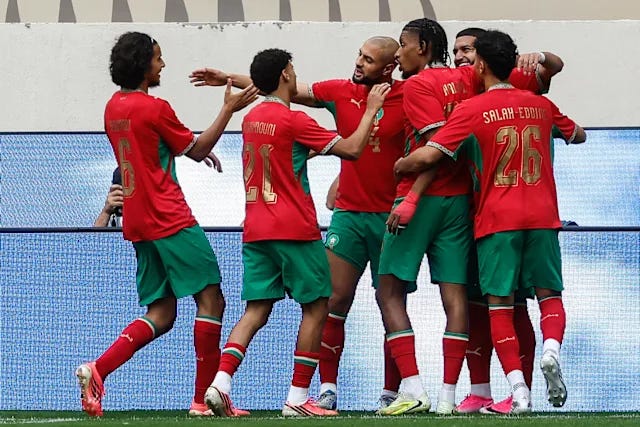
The funny thing is that even when we try to focus solely on the football, politics reappears. Nearly a quarter of the players at this World Cup were born in a different country than the one they represent. Ninety-six percent of Curaçao’s squad was born abroad. Eighty-five percent of DR Congo’s. Seventy-three percent of Morocco’s, and I understand that reality intimately.
I am Nigerian via South London and Baltimore. I am proud of each place I call home, and it reflects in the national teams I support, or support liberally. There’s a pervasive reality about being British and Black: you’re often a direct product of colonialism. No matter where your motherland or fatherland is, you’re more than likely rooting for your oppressors in a twisted way.
The first time I viscerally felt racism was at a youth football trial in England. They told my dad we were extremely talented, but your sons are Black. From the micro to the macro, race is the elephant in the room. That’s why the Black players who’ve worn the England shirt mean everything to me.
Laurie Cunningham, Viv Anderson, John Barnes, Ian Wright, Andrew Cole, Rio Ferdinand. Raheem Sterling, Bukayo Saka, Marcus Rashford, Jude Bellingham, and Kobbie Mainoo. These are heroes. Millions of Black men and women who never made it professionally live through them.
That’s why being an England fan is so complicated. When England loses, Black players often become convenient scapegoats for a country that hasn’t won a major trophy since 1966. A country that too often refuses to look inward and instead searches for someone else to blame, usually someone with darker skin. I moved to America in 2001, and the story isn’t entirely different.
The first two Black players on a U.S. World Cup squad appeared in 1990; by 2022, a record twelve Black players were included. The squads have historically been lily white, but that is changing.
Part of my privilege is growing up in the U.S. youth soccer system. There is a football culture in America. There always has been. Like many things in America, the subculture eventually becomes the main culture. What you’re seeing in 2026 isn’t the birth of American football culture; it’s the growth of something that was always there. As I sit here, days before World Cup 2026, these wispy thoughts consume me.
I root for success because football is hard. Sport is hard; hell, achieving anything worthwhile is hard. I root for the young Black men and women pulling on national team shirts. Whether it’s their motherland, fatherland, adopted homeland, or somewhere in between.
I understand. Bukayo Saka, a Nigerian man through and through, will stand there when they play God Save the King. Folarin Balogun, another Nigerian man, will stand there when they play The Star-Spangled Banner, but Nigeria will not be there. That’s the thing people miss when they say, “Keep politics out of sport.”
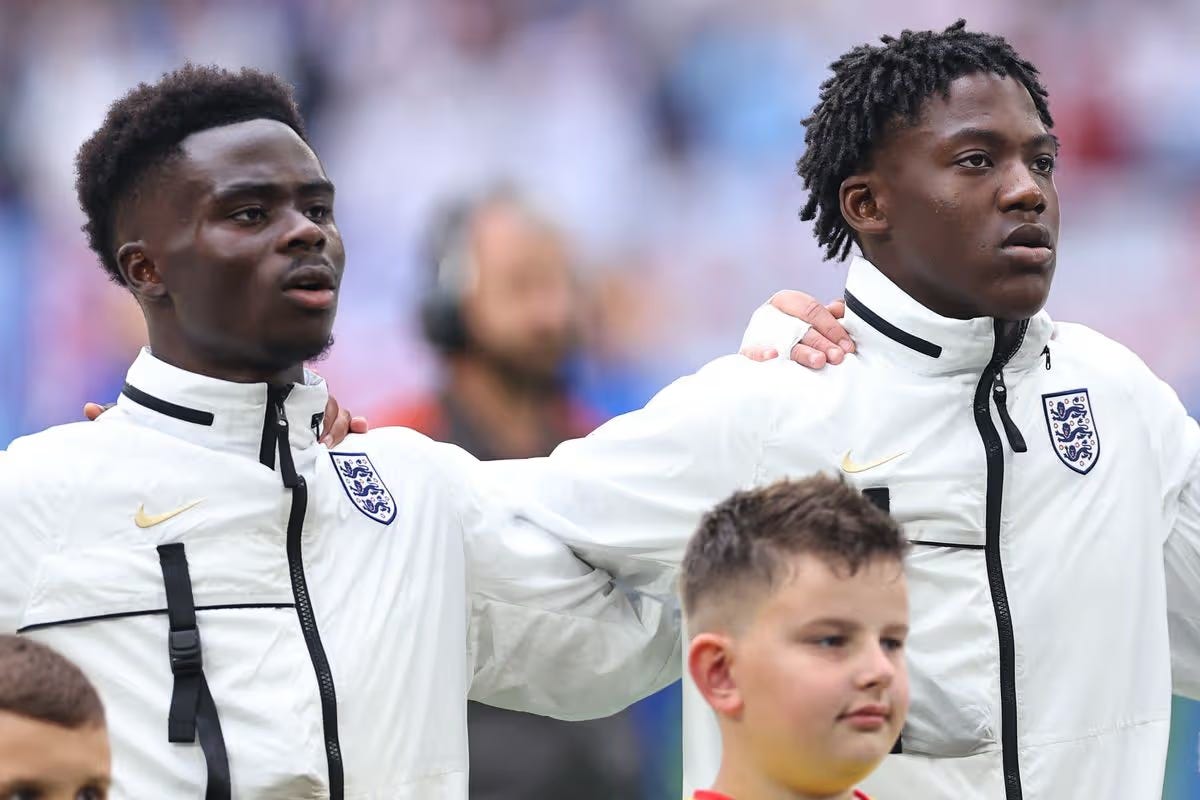
Politics is already there, identity is already there, history is already there. Media outlets, politicians, trolls, and opportunists continue feeding divisions that should have been starved long ago. So what should we do?
Try to find your joy, for ninety minutes, suspend reality, and have fun. Have fun like the Doué brothers. Guéla Doué, representing Côte d’Ivoire, was raised in France. Désiré Doué, représentant la France. In this, there’s politics, identity, history, but it’s two brothers standing on opposite sides in a friendly sharing joy and pride, and that’s beautiful.
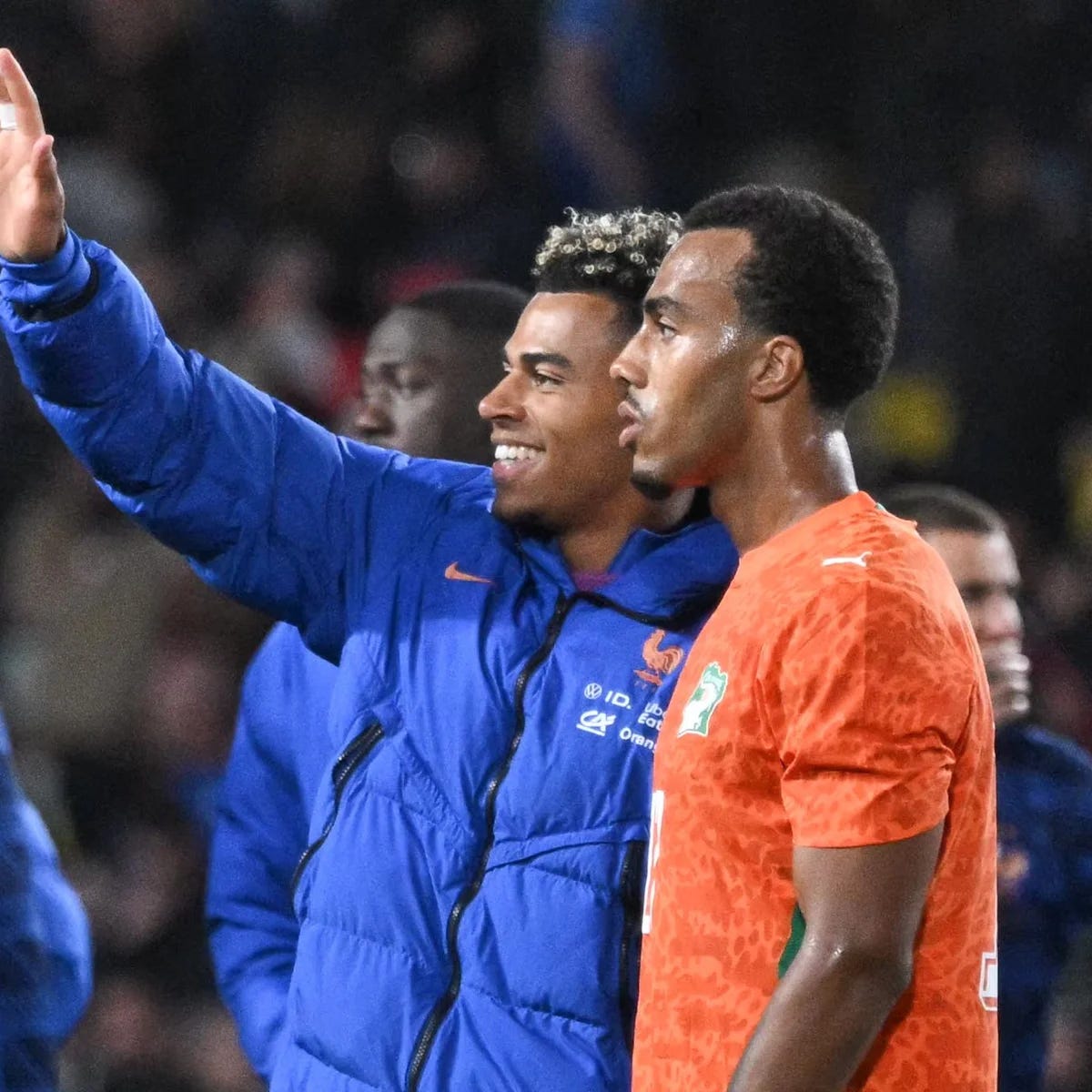
Remember that we are all products of the world we live in. Be a better neighbor, not just to people who look like you, but to everyone. One of my favorite parts of this tournament has been watching non-Americans experience America, Canada, and Mexico for the first time. Watching cultures collide. Watching people discover each other.
The world is a beautiful place when we come together and champion each other, at the end of the day, it is a World Cup. Root for the player who looks like you, root for the player who came from where you came from. Root for the player carrying the same unspoken weight you carry every day they pull on that shirt.
Root for the player who simply makes you smile, root for the players who had to choose between nations, because nothing about our stories has ever been simple.
We don’t have the luxury of keeping politics out of anything; we never did, and we never will.
So we do what we’ve always done, we show up, feel every goal, every dribble, every tackle, every moment.
We feel the joy when they win, and we feel the heartbreak when they lose. We cry, we celebrate. And we keep loving the game that, despite everything, has always found room for us, even when the world around it didn’t.
The world can make you cynical, it can make you angry and want to hate everything, please don’t. Go outside, join communities, take in the scenes, and be part of something bigger than yourself.
Like the cartoons, there’s the devil on one shoulder telling you to burn it all down, and the angel on the other telling you to heal it.
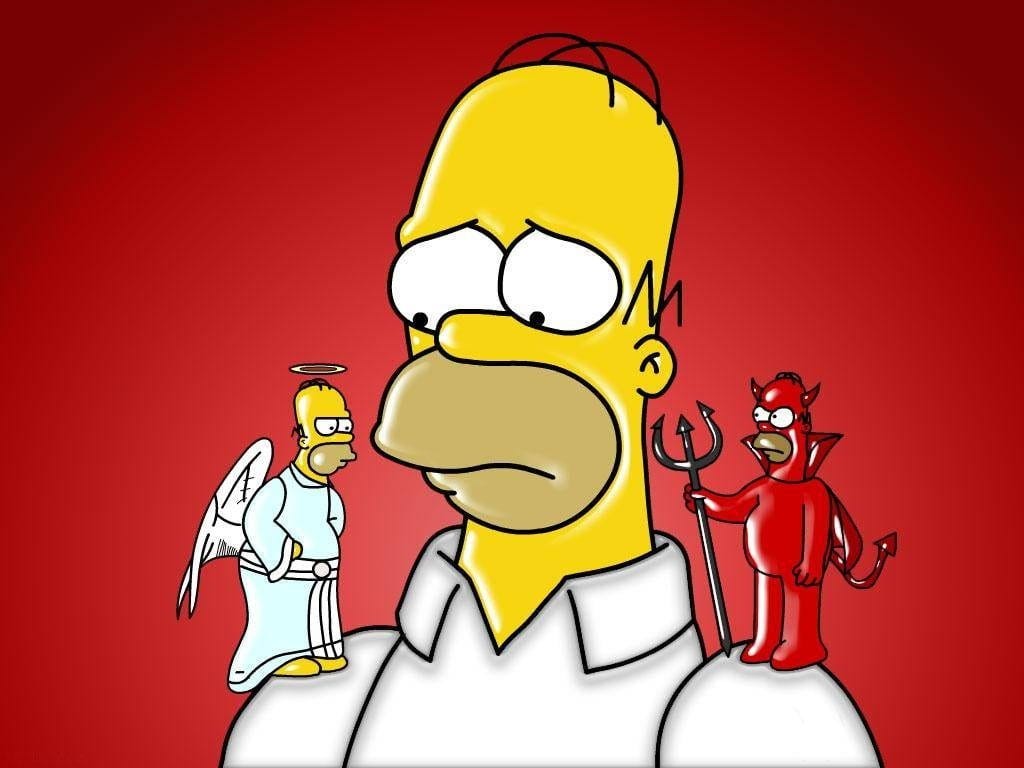
Maybe that’s the real battle of adulthood. Understanding the world enough to know why things feel heavier than they did in 1998, while still refusing to let go of the joy that made you fall in love with football in the first place. Maybe we’ll never catch the feeling of our first World Cup.
But every four years, we try anyway.
Great sentiment. It's even more true for me as the first WC I watched as a kid was Mexico 1970 so I guess I scored the jackpot and have been trying (unsuccessfully) to repeat the sensation ever since 😀
"When you're an adult, you chase the feeling of your first World Cup" hit me too. Mine was France '98. It was the year I left my country for the first time, a family trip to France of all places (2 months before world-cup), and I came back with Brazil shirts and a ball. I'm not Brazilian. I just loved Ronaldo. I still remember crying when he lost that final. Childhood fandom doesn't care about passports, which is maybe your whole point.
The stat that stopped me in your piece: 96% of Curaçao's squad born abroad. The smallest nation ever to qualify, built almost entirely from its diaspora, coached by a 78-year-old Dutchman. Politics, identity, and history in one squad list.
Beautiful piece. The Doué brothers framing is the right note to end on.